
Success Story
Vorderlandhus
From resistance to routine
How the Vorderlandhus social center uses necta to structure processes, relieve people – and connect generations.
The Vorderlandhus social center in Vorarlberg offers social services across generations – from childcare to open youth work and care services to meal services and daycare. Founded by eight cooperating municipalities, it is a central living space that is available to people of all ages with regional roots and human warmth.

Initial situation
Before the introduction of necta, the Vorderlandhus social center used smaller software solutions that were limited to kitchen programs with a focus on recipes and products. For many processes, only manually maintained lists existed. The upcoming introduction of the allergen regulation created the need for a more structured, future-proof system. Although the idea initially met with skepticism internally, the management consistently supported the change.
Goals & Decision Basis
The goal was to find a system that could flexibly support future requirements and be easily integrated into the existing way of working. The decision was made in favor of necta because it has a modular structure, remains cost-transparent and can be expanded at the same time. An additional advantage was that necta was already in use at the Lochau vocational school, a sign of long-term applicability and trust in the region.
Project progress & challenges
The project was planned together with the team. Tasks were clearly assigned, and implementation took place in a structured step-by-step manner. Attention was paid to clear project goals as well as the individual pace of implementation. The support of an administrative force in addition to the kitchen team was particularly helpful.
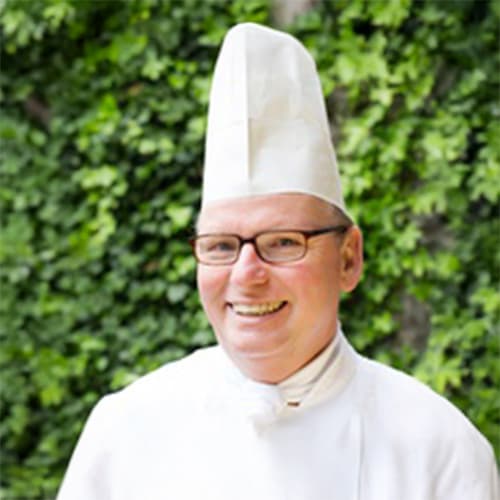
“Despite initial skepticism in the team, we used necta to introduce a system with a clear structure and good support that is now an indispensable part of everyday work.”
Gerhard Nachbaurformer kitchen manager, Vorderlandhus social center
Special requirements
At the time of the introduction, there was no WLAN infrastructure in the house, which required additional technical planning. The introduction of the ordering system had to be designed sensitively, especially in the care and children’s areas, where the acceptance of the users was particularly important. On the supplier side, the new transparency sometimes met with resistance: the comparability of offers created greater competitive pressure, which led to fears among some suppliers regarding possible sales losses. Another challenge at the beginning was the data quality, for example with article master data.
“We had to tackle many construction sites at the same time, from the WLAN infrastructure to the supplier connections. But with clear communication and necta as an excellent partner, we solved this very well step by step.”
Gerhard Nachbaurformer kitchen manager, Vorderlandhus social center
Results & Benefits
The introduction of necta has noticeably streamlined workflows and created interlocking processes, from customer order to the goods order to billing. The central database provided more structure and efficiency, especially in purchasing and supplier communication.
A major gain was the time saved in the administrative area, as many processes are now automated and digitized. The routine in the team was also strengthened because work steps are more clearly defined and reliably linked.
A particular added value was shown in the allergen declaration: With necta, a clean, LMIV-compliant labeling is achieved, which is automatically transferred to customer communication, a crucial point for legal certainty and trust.
In addition, necta, as a data-based tool, was able to actively contribute to supporting the “Vorarlberg on the Plate” project by transparently proving origin and flows of goods.
The most popular feature of necta at the Vorderlandhus social center
The integrated ordering system from necta is particularly valued in the social center. It clearly structures the entire process from the order of the residents to the issue and thus brings noticeable relief to everyday kitchen life.
At a glance, it is clear how many portions have been ordered, which quantities have to be cooked and purchased. This creates planning security, reduces overproduction and ensures a reliable supply for the residents.
The system also brings great advantages when designing the offer: Thanks to the reliable order data, menus can be better calculated and specifically adapted, both with regard to preferences and economic efficiency.
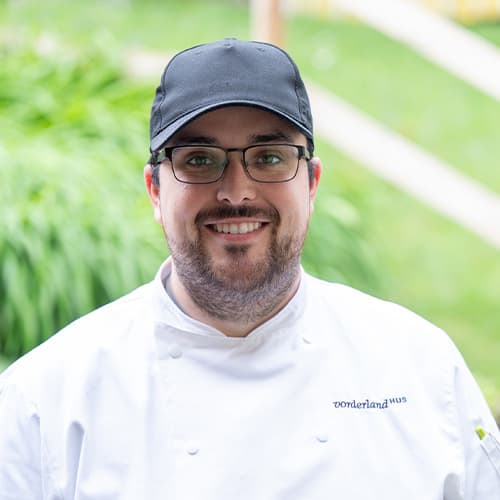
“With necta's ordering system, we know with just a few clicks what is being ordered, what we need and how we can design our offer in a meaningful and sustainable way.”
Raphael HuberKitchen Manager, Vorderlandhus Social Center
Subscribe to necta News
Receive regular insights into digital kitchen processes, product innovations, and practical success stories.
A system that stays – even when people change.
In Vorderlandhus, necta was not only introduced and optimized, it was also successfully passed on from one generation of kitchen management to the next.
This shows: necta is more than a software solution. It has become an integral part of the operational structure – deeply rooted in daily routines, adaptable and future-proof.
This means that knowledge is not tied to individual people, but is preserved and passed on by the system itself.
User feedback
While the initial skepticism in the kitchen team was noticeable, many employees were convinced by positive experiences. A high level of acceptance was achieved, especially in the areas of care, administration and children’s facilities. An additional advantage: Residents can select and order their own food, which strengthens their independence and at the same time increases satisfaction – an important contribution to the quality of life in everyday life.
The introduction of new digital processes naturally always brings certain initial hurdles, but was generally well received.
“If you feel that a new system like necta really makes everyday life easier, the initial reluctance also disappears.”
Raphael HuberKitchen Manager, Vorderlandhus Social Center
Training requirements & introduction
Intensive personal support was required at the beginning. A central, internal contact person was available. The operation of the ordering system itself was intuitive. More time was needed to explain the meaning and benefits of the changeover.
Technical integration
The following systems were successfully connected:
- Supplier connection
- Accounting
- Ordering system
The data exchange takes place digitally via existing interfaces with connection to central systems.
Future Perspective
The positive experiences in the Vorderlandhus social center have paved the way for a broader use of necta (within the provider) in other Vorarlberg social institutions: The connection of another five houses is already being planned, as is the integration of the “Meals on Wheels” area.
What began as a courageous step is now the digital backbone of a modern, people-oriented kitchen operation – ready for anything that comes tomorrow.
Company
Vorderlandhus Social Center
Industry
Social Institutions
Location
Vorarlberg
Areas of application
Food supply in care, children’s facilities and daycare